The 🇪🇺 EU Directive on Empowering Consumers for the Green Transition (ECGT) states:
“[…] prohibit making generic environmental claims without recognised excellent environmental performance which is relevant to the claim. […] Such generic environmental claims should be prohibited whenever there is no excellent environmental performance demonstrated or whenever the specification of the claim is not provided in clear and prominent terms on the same medium, such as the same advertising spot, product’s packaging or online selling interface.”
This means the following:
Otherwise generic Green Claims must be explained to be compliant
The explanation must be simple and understood by the target audience (usually the general public)
The explanation must be on the same medium as the green claim (e.g. packaging, or TV spot, radio ad, etc.)
Further evidence and verifications should be linked via QR code and short link
Note how in the illustrative examples below, the “info i” badge is used to mark the content boxes (e.g. in the top left corner). This same “info i” badge should be placed next to any green claim that appears on the packaging, so that consumers can be visually guided to the explanation (like a type of asterisk).
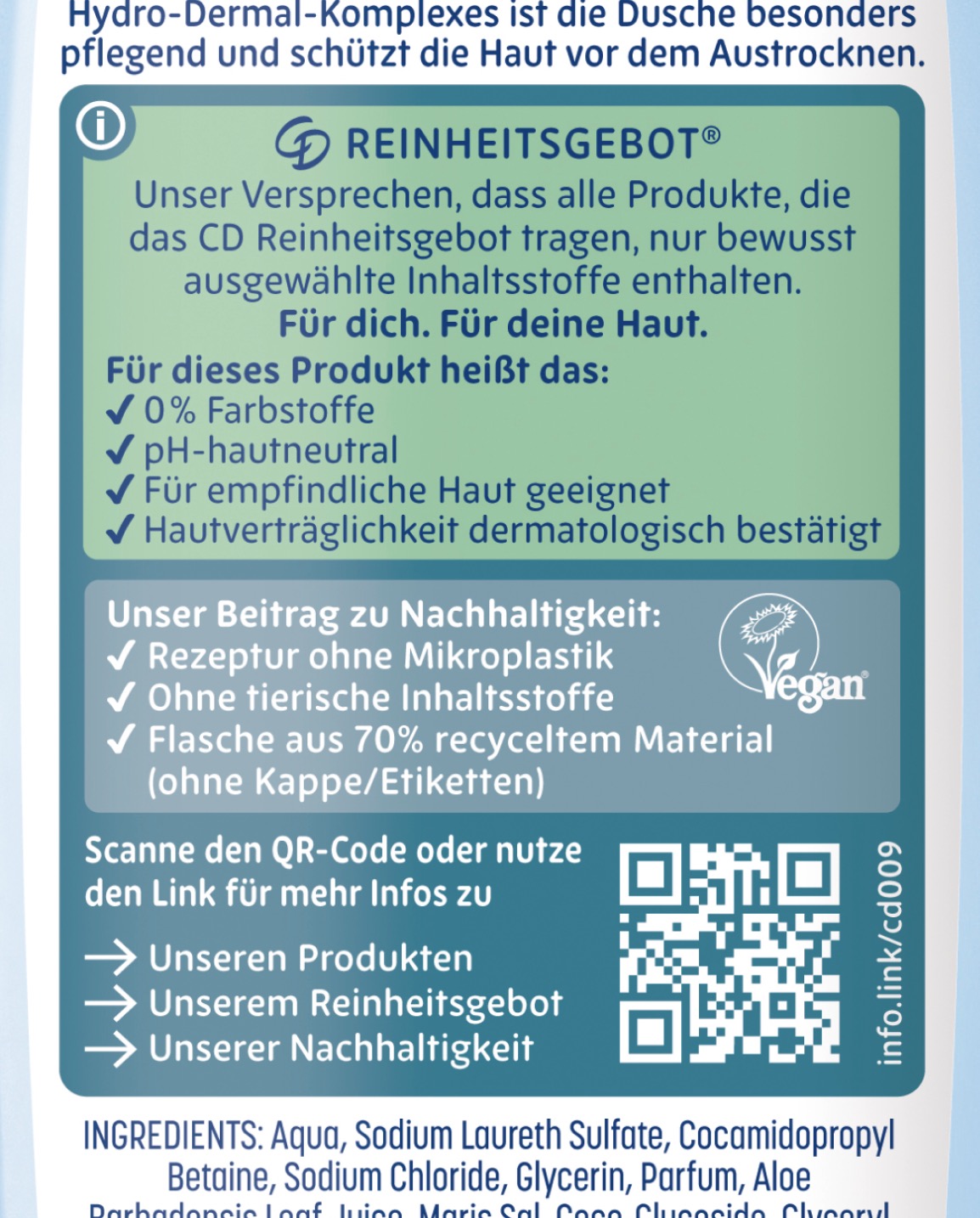
In this example, the brand distinguished between functional claim specifications (top box) and green claim specifications (middle box) to maximise compliance.
The info box was linked from the front of the packaging via a “info” icon, which is understood internationally.
The QR code is activated with a clear call-to-action
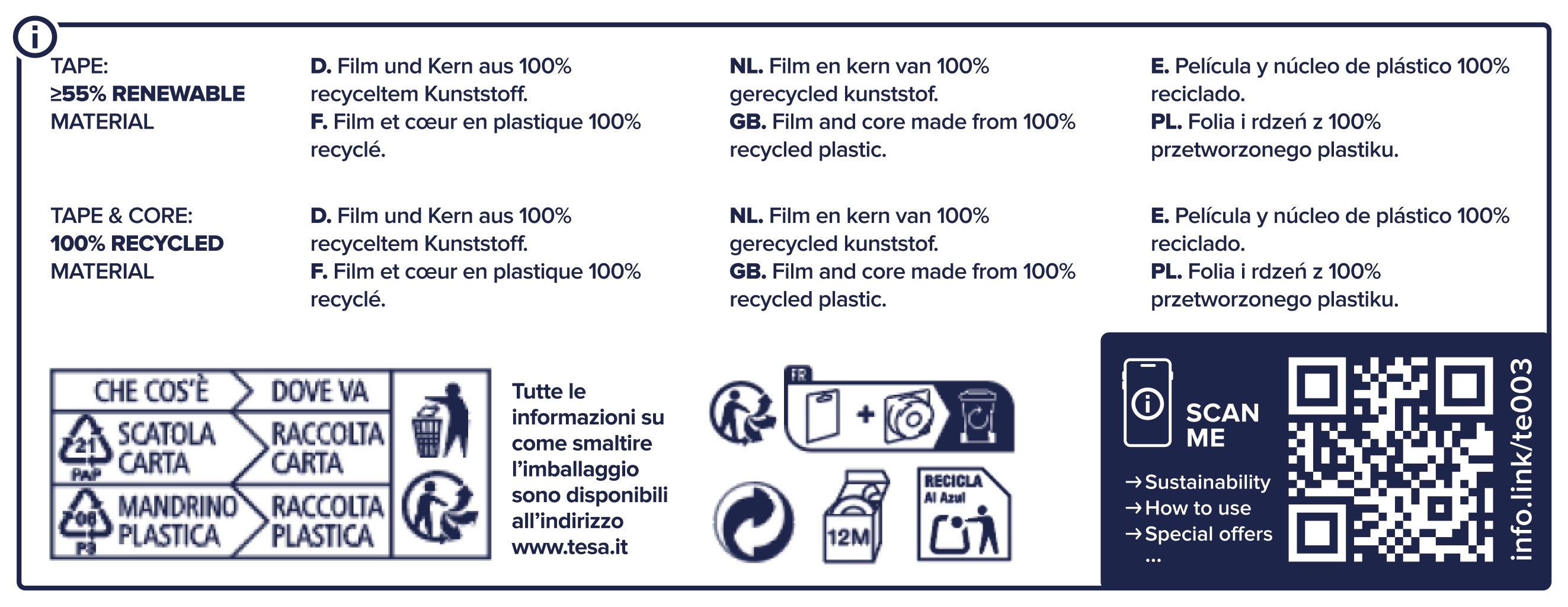
In this example, the brand specified two green claims in multiple languages
In addition, they included recycling information
The QR code is activated with a clear call-to-action
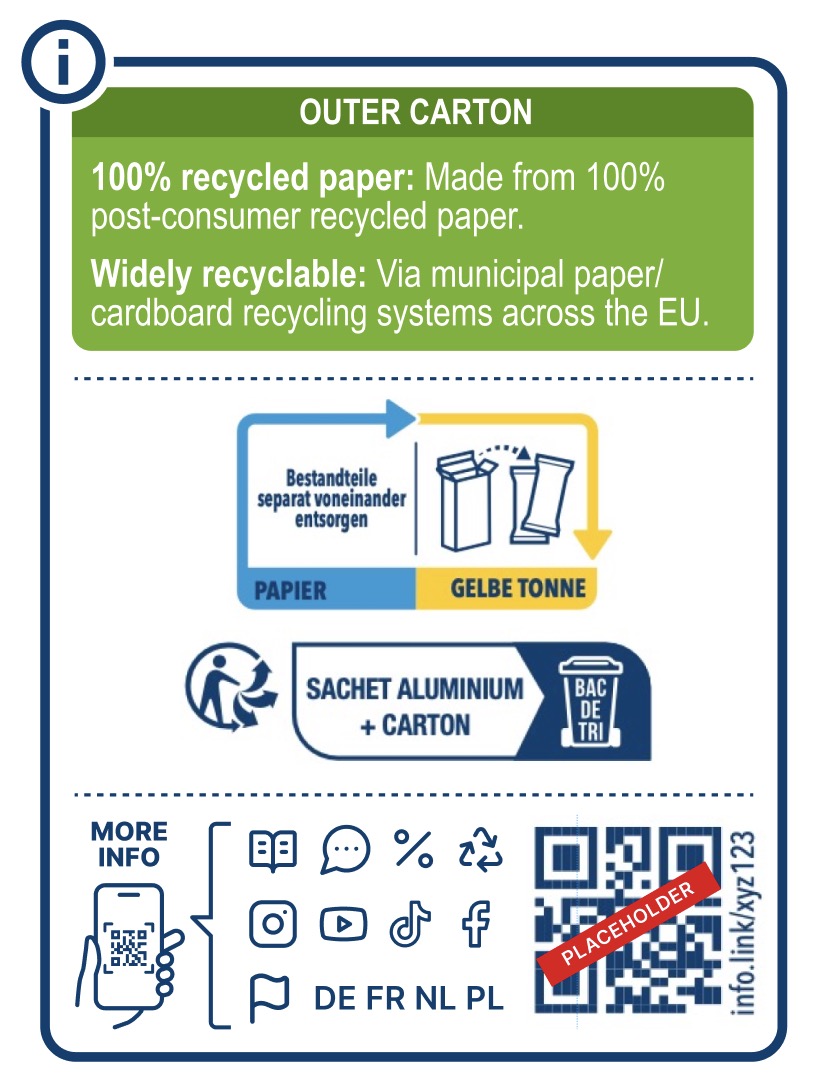
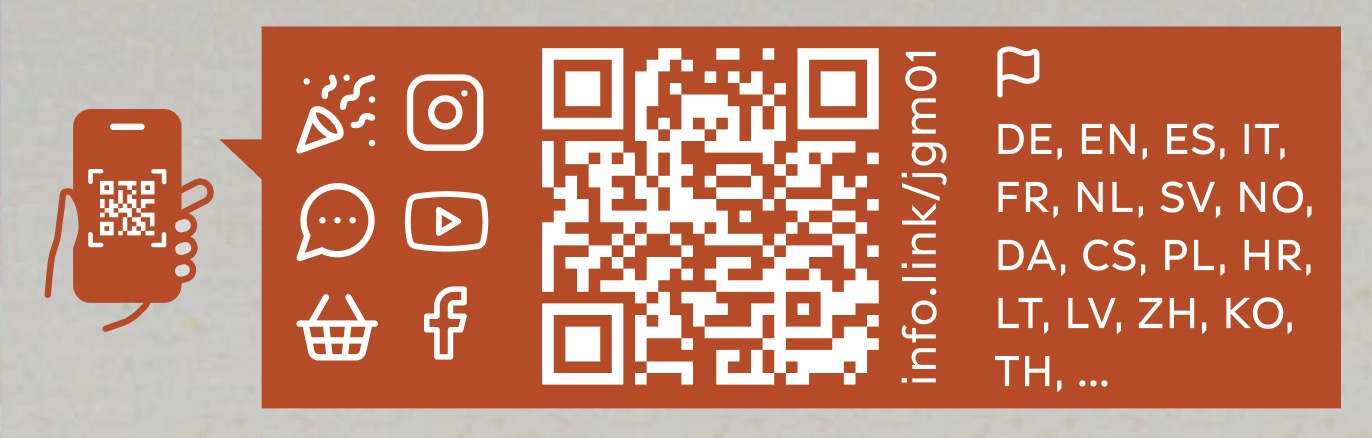
In this example, no green claims are specified (but specifications could of course be added)
The info box only uses icons, which communicates to an international audience and saves space
Language codes (e.g. DE, EN, …) indicate to consumers that translations are available behind the QR code on the digital label